Dr Željko Kojadinović — NEUROHIRURGIJA I LEČENJE BOLA
Dr Zeljko Kojadinovic — Pain Treatment & Neurosurgery


Spinal Meningioma and Schwannoma — Extramedullary Spinal Tumors
Author:
Dr. Zeljko Kojadinovic, MD, PhD
— Consultant Neurosurgeon
Specialized Experience:
30 years of clinical expertise in neurosurgery.
Last medically reviewed:
March 08, 2026
Who This Extramedullary Spinal Tumors Page Is For
This page is intended for patients in whom MRI has revealed a spinal canal tumor compressing the spinal cord or nerve roots, most commonly suspected to represent a spinal meningioma, schwannoma, or a similar extramedullary tumor. It is also relevant for individuals with an unclear spinal lesion discovered during imaging performed for back pain, radicular symptoms, or neurological complaints.
If spinal tumor surgery has been proposed, neurological symptoms are progressing, or MRI findings remain difficult to interpret, an individualized neurosurgical second opinion may help clarify the most likely tumor type, urgency of treatment, surgical risks, and the safest management strategy based on tumor location, degree of spinal cord compression, and overall neurological condition.
When patients seek a second opinion for spinal meningioma, schwannoma or similar extramedullary tumors
• A spinal canal tumor compressing the spinal cord or nerve root has been detected on MRI, but it remains unclear whether the lesion represents a meningioma, schwannoma, or another tumor type
• Surgery has been recommended, yet expected neurological recovery, surgical risks, or urgency of treatment have not been clearly explained
• Symptoms are present but relatively mild, creating uncertainty whether immediate surgery or observation is the safer option
• Progressive radicular pain, walking difficulty, numbness, or bladder dysfunction suggest increasing spinal cord or nerve root compression
• Different specialists recommend observation, surgery, or radiotherapy without clear agreement
• Neurological symptoms persist or worsen after previous spinal tumor surgery or treatment
Not every extramedullary spinal tumor requires immediate surgery, particularly when discovered incidentally and neurological function remains preserved. However, delayed treatment in the presence of progressive spinal cord compression may lead to permanent neurological impairment.
When diagnosis, treatment timing, or surgical strategy remain uncertain, careful neurosurgical evaluation becomes essential.
If your situation involves uncertainty regarding diagnosis or treatment planning, you may request an individualized neurosurgical review here:
Request Second Opinion
Spinal Meningioma, Schwannoma and Similar Extramedullary Tumors — Quick Summary (Read This First)
- Extramedullary spinal tumors (e.g., meningioma and schwannoma) develop outside the spinal cord but within the spinal canal. They compress and displace the spinal cord or nerve roots without growing within the neural tissue itself.
- The most common tumors are spinal meningiomas and schwannomas. These tumors are usually benign and slow growing, and surgical treatment is often highly effective.
- Radicular pain is frequently the earliest symptom. Patients commonly experience localized back pain or nerve-root pain radiating into the arm, chest, or leg, depending on tumor location.
- Neurological symptoms typically develop gradually. Walking difficulty, limb weakness, numbness, coordination problems, or bladder dysfunction appear as spinal cord compression progresses.
- Symptoms may remain mild for a long time despite significant tumor size. Because the spinal cord is slowly displaced without spinal cord infiltration, tumors may become large before clear neurological deficits develop.
- MRI with contrast is the key diagnostic examination. It defines tumor location, relationship to the spinal cord and nerve roots, dural attachment, and possible foraminal or paravertebral extension.
- Not all extramedullary tumors require immediate surgery. Approximately 30–50% of incidentally detected meningiomas or schwannomas may remain stable and can be safely monitored with periodic MRI follow-up.
- Surgery is recommended when neurological symptoms progress or spinal cord compression increases. Complete tumor removal is frequently achievable without neurological deficits, as these tumors typically create a natural operative corridor around the spinal cord.
- Neurological recovery after surgery is often substantial. Temporary worsening may occur but improvement commonly develops over weeks to months.
- Radiotherapy is rarely required. It may be considered in residual or recurrent tumors or when surgery is not medically feasible.
- The most important predictor of long-term outcome is neurological status before treatment.
Most readers benefit from reviewing this Quick Summary together with the sections on Symptoms, Diagnostic Imaging, and Surgical Treatment. Later sections provide more detailed explanations intended for patients seeking a deeper understanding before treatment decisions are made.
Contents
- Who This Page Is For
- Quick Summary
- Definition and Tumor Types
- Anatomy and Compression
- Tumor Locations
- Spinal Schwannoma
- Spinal Meningioma
- Symptoms by Location
- Cervical Region
- Thoracic Region
- Lumbar and Conus
- Diagnostic Imaging
- Incidentally Detected Tumors
- Surgical Treatment
- Anterior Tumors
- Foraminal and Extraspinal Extension
- Possible Complications
- Adjuvant Treatment
- Recurrence
- Long-Term Prognosis
- Why Opinions Differ
- Request Second Opinion
- FAQs
What Are Intradural-extramedullary Tumors
Intradural-extramedullary spinal tumors arise within the dural sac but outside the spinal cord itself (in the space between dura and spinal cord). Unlike intramedullary tumors, which grow inside neural tissue, these lesions compress and displace the spinal cord or nerve roots from the outside. Because neural structures are typically displaced rather than infiltrated, neurological deficits often develop gradually and surgical treatment is frequently highly effective.
Among all spinal tumors, approximately 30–40% are intradural-extramedullary lesions, making this the most common group of primary tumors located inside the spinal canal. The majority are benign and slow growing.
The most frequent tumor types include:
- schwannoma (neurinoma) — approximately 45–55%
- meningioma — approximately 30–40%
- less commonly neurofibroma, paraganglioma, metastasis, and other rare meningeal tumors
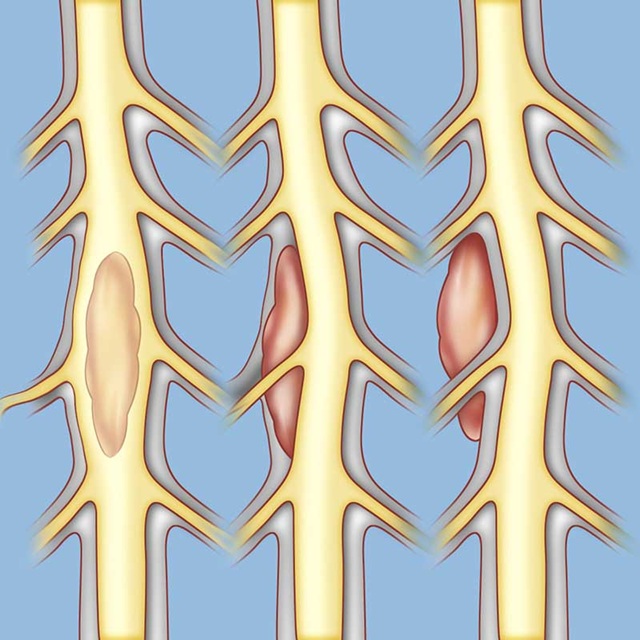
Image: Spinal tumors can be located in three different areas (from left to right): intramedullary (inside the spinal cord, e.g., ependymoma or astrocytoma), intradural-extramedullary (inside the spinal membrane but outside the cord, e.g., meningioma or schwannoma), or extradural (outside the spinal membrane, e.g., bone metastases or vertebral tumor).
Anatomical Relationships and Mechanism of Compression
The spine consists of 5 main regions: cervical, thoracic and lumbar spine, sacrum and coccyx (tailbone).
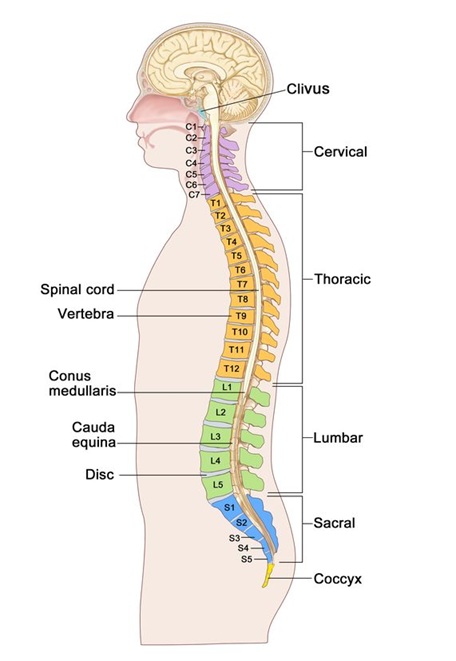
Image: Regions of the spine: cervical (neck), thoracic (mid-back), lumbar (lower back), sacral, and coccygeal (tailbone). Inside the spine is the spinal canal, which houses the spinal cord. The spinal cord ends at the level of the L1 vertebra, so the spinal canal of the lumbosacral region contains only nerve roots (either individually or as the cauda equina). Learn more on our Spain anatomy page.

Image: The spine is composed of vertebrae stacked one on top of the other. Inside, these bones form the spinal canal, which acts as a protective tunnel. The spinal cord and the nerve roots that branch off from it pass through this canal.
The spinal cord lies within cerebrospinal fluid inside the dural sac. Spinal nerve roots emerge laterally from the cord and exit through intervertebral foramina.
In intradural-extramedullary tumors, the tumor develops from structures surrounding spinal cord, most commonly:
- spinal nerve roots- schwannoma
- arachnoid or dural membranes- meningioma
As the tumor enlarges, it gradually compresses adjacent neural tissue (spinal cord and/or nerve root). Because growth is usually slow, the spinal cord adapts by displacement rather than immediate injury. This progressive displacement frequently creates a natural operative corridor between tumor and spinal cord, so removal of the tumor can be done without retracting the spinal cord.
Neurological impairment therefore results primarily from:
- mechanical compression of the spinal cord
- nerve root compression
- disturbance of spinal cord blood supply
- prolonged deformation of neural pathways
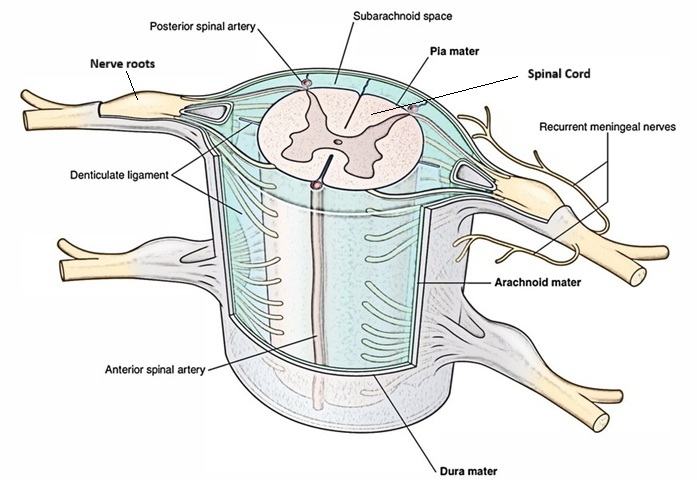
Image: The spinal cord and its nerve roots. The anterior (motor) and posterior (sensory) roots emerge from the spinal cord and join to form a single root. As they exit the spinal canal through openings between the vertebrae (foramina), they form the nerves. Both the spinal cord and the nerve roots are encased in protective layers called meninges (dura mater and arachnoid). Between the arachnoid layer and the nerve elements, clear cerebrospinal fluid (CSF) circulates.
Tumor Locations Along the Spine
Tumor location varies according to biological origin.
Thoracic spine — approximately 50–60%
- most common site for spinal meningiomas
Cervical spine — approximately 20–30%
- frequent location for schwannomas
Lumbar and conus region — approximately 20–25%
- commonly associated with nerve root schwannomas
Tumor level strongly determines clinical presentation and surgical strategy.
Spinal Schwannoma (Neurinoma)
Schwannomas originate from Schwann cells forming the sheath of spinal nerve roots, most often dorsal (sensory) roots.
These tumors typically grow slowly and expand eccentrically within the spinal canal. Since these tumors arise from the nerve roots, early symptoms frequently reflect radicular irritation, manifesting as radicular pain (e.g., sciatica, intercostal neuralgia, or brachialgia).
A characteristic feature is the extension of the tumor through the neural foramen. Tumors may develop both intradurally and extradurally, forming a dumbbell-shaped configuration with a paravertebral component. Sometimes the paraspinal component of the tumor is significantly larger, and there are cases where a neurinoma develops predominantly in the paraspinal space as a large tumor mass.
Long-standing schwannomas may cause:
- enlargement of the neural foramen
- thinning or erosion of the vertebral pedicle or body
Major neurological deficits often appear late because the spinal cord gradually accommodates tumor expansion.
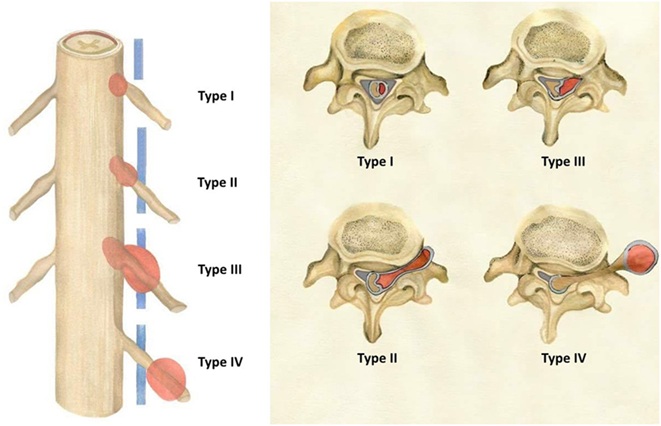
Image: Different types of spinal schwannomas. Depending on their origin, growth direction, and size, they can be located strictly within the spinal canal, involve both the spinal canal and the foramen, extend through the spinal canal and foramen into the paraspinal space, or be located entirely outside the spinal canal.
Spinal Meningioma
Spinal meningiomas arise from arachnoid cap cells attached to the dura mater.
Typical characteristics include:
- slow biological growth
- firm dural attachment
- posterior or posterolateral positions predominate
- predominance in thoracic spine
- higher incidence in women
Because meningiomas compress neural tissue without invading the spinal cord, surgical removal frequently results in significant neurological recovery when performed before advanced spinal cord damage develops.
Symptoms Depending on Tumor Location
Clinical symptoms primarily reflect nerve root irritation followed by spinal cord compression.
Radicular pain commonly represents the earliest manifestation and distinguishes these tumors from intramedullary lesions.
Cervical Region
Patients may develop:
- neck pain radiating into arm or shoulder
- numbness or paresthesia in hands
- reduced manual dexterity
- progressive gait instability
- limb stiffness in advanced compression
- rarely respiratory compromise in severe cases
Thoracic Region
Typical symptoms include:
- localized mid-back pain
- band-like chest or abdominal pain
- progressive walking difficulty
- leg stiffness or spasticity
- balance disturbance
Thoracic tumors are frequently diagnosed late because early symptoms mimic musculoskeletal pain.
Lumbar and Conus Region
Common manifestations include:
- sciatica-like leg pain
- sensory disturbance in legs
- saddle numbness
- bladder or bowel dysfunction
- sexual dysfunction
Large nerve-root schwannomas may produce prolonged radicular pain before spinal cord dysfunction becomes evident.
Diagnostic Imaging
Spinal meningiomas and schwannomas are usually diagnosed with contrast-enhanced MRI of the spine, because MRI shows the tumor’s level, relationship to the spinal cord or nerve roots, dural attachment, foraminal extension, and degree of compression.
MRI allows evaluation of:
- tumor position relative to spinal cord
- degree of neural compression
- dural attachment
- foraminal extension
- paravertebral tumor components
- spinal cord signal change
Schwannomas typically appear eccentric and may widen neural foramina, whereas meningiomas often demonstrate broad dural attachment and homogeneous enhancement.
Imaging of the entire spinal axis may be recommended to exclude multiple lesions.
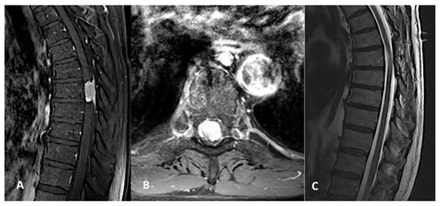
Image: Figures A and B show a contrast-enhanced MRI of the thoracic spine, revealing a bright (enhancing) meningioma within the spinal canal compressing the spinal cord. Image C shows the postoperative state after gross total resection (complete surgical removal) of the meningioma.
Incidentally Detected Intradural–Extramedullary Tumors
An increasing number of intradural–extramedullary tumors are discovered incidentally during MRI examinations performed for unrelated reasons, such as degenerative spine disease or nonspecific back pain. When these tumors do not produce neurological symptoms and do not cause significant spinal cord compression, immediate surgery is usually not required.
Clinical studies show that approximately 30–50% of incidentally detected meningiomas or schwannomas may never require surgical treatment during a patient’s lifetime, particularly in older individuals or when tumor growth remains minimal. Many lesions demonstrate extremely slow growth or long-term radiological stability.
This situation is especially relevant in patients with multiple tumors, such as in neurofibromatosis or spinal meningiomatosis. It is common clinical practice that only the symptomatic or enlarging tumor is treated surgically, while other tumors are safely monitored with periodic MRI follow-up. In some patients, none of the detected tumors ever require intervention.
MRI surveillance is typically performed after 6–12 months initially and later at longer intervals if stability is confirmed. Surgery is recommended only when tumor growth, progressive spinal cord compression, or neurological symptoms develop.
Request Spinal Meningioma or Schwannoma Second Opinion — 24-Hour Review (Priority Option Available Within Hours)
Being told that a spinal canal tumor compressing the spinal cord or nerve roots is present on MRI often raises important and time-sensitive questions:
Is this most likely a meningioma, schwannoma, or another spinal tumor?
Is neurological deterioration expected?
Does the finding require surgery now, or can it be safely monitored?
An independent neurosurgical second opinion may help clarify the most likely diagnosis, the urgency of treatment,
and the safest therapeutic strategy based on imaging findings, tumor location, degree of spinal cord compression, and expected neurological outcome.
- ✔ Send a brief message describing your symptoms together with key findings from your MRI report
- ✔ You will receive a reply within 24 hours explaining whether an online consultation is appropriate and which documentation is required
- ✔ Priority cases: urgent uncertainty regarding diagnosis, treatment recommendation, or proposed spinal surgery — write PRIORITY in your first message
- ✔ MRI images (DICOM format) and radiology reports can be reviewed after initial contact to assess tumor characteristics and surgical strategy
- ✔ During consultation, we explain probable tumor type, surgical indications, expected neurological recovery, operative risks, and realistic treatment options — including up to 10 days of follow-up clarification
Consultation fees typically range from $180–250, depending on case complexity and documentation volume.
Secure payment by credit card, PayPal invoice (USD), or bank transfer.
This corresponds to typical international specialist telehealth neurosurgical second-opinion services.
Surgical Treatment
Surgery is the definitive treatment for most symptomatic spinal meningiomas and schwannomas, especially when neurological symptoms progress or MRI shows increasing spinal cord or nerve-root compression.
Because these tumors usually grow slowly and are located posteriorly or posterolaterally, progressive displacement of the spinal cord commonly creates operative space. In many patients, tumor removal can therefore be performed without direct retraction or extensive manipulation of the spinal cord.
Surgery is performed through a posterior approach with the patient positioned prone (lying on their stomach, with the incision made on the back).
Standard surgical steps include:
- posterior exposure of the laminae of vertebrae
- Laminectomy or Laminoplasty: The surgical approach involves either a laminectomy (the permanent removal of the vertebral arches to provide access) or a laminoplasty (the reconstruction of the spinal canal, where the removed laminae are replaced and fixed back into their original position following tumor excision to preserve spinal stability and protection).
- dural opening
- microsurgical tumor dissection from the spinal cord and nerve roots and piecemeal tumor removal.
- preservation or selective division of involved nerve root when necessary (Schwannoma)
- In spinal meningioma surgery, the tumor is removed together with treatment of its dural attachment, which is usually coagulated (rather than excised) to reduce recurrence risk; routine removal and replacement of the dura is no longer required in most modern procedures, although dural resection may be performed selectively when infiltration or recurrence is suspected.
Complete tumor removal is frequently achievable.
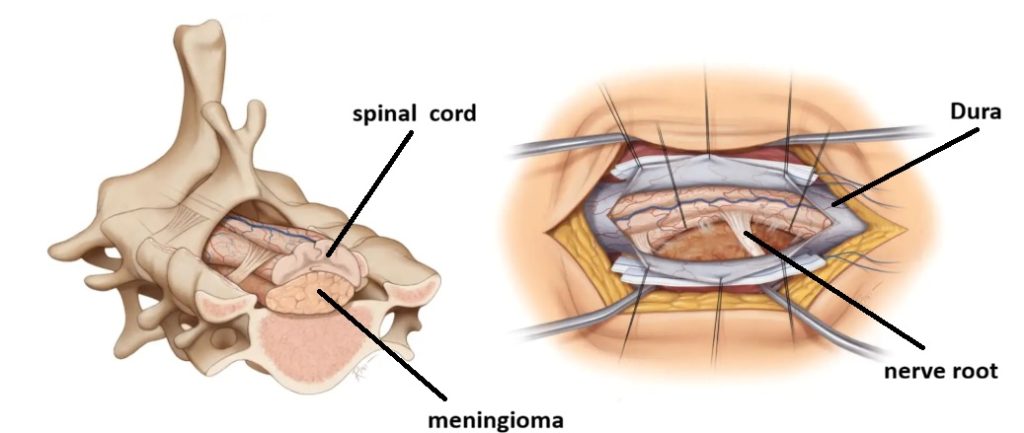
Image: Surgery for a spinal meningioma. Shown are the skin incision and muscles retraction, the removed laminae on 3 levels (laminectomy), and the opened dura mater. It displays the spinal cord, nerve roots, and the meningioma, which arises from the anterior and right lateral aspects of the dura, compressing the spinal cord.
Anteriorly Located Tumors and Complex Approaches
Greater technical difficulty occurs when tumors arise anterior to the spinal cord. In these situations, the spinal cord may become flattened into a thin layer positioned between tumor and posterior dura.
Safe access may require anterior or anterolateral approaches. In selected cases, vertebral body removal (corpectomy) is performed to reach the tumor without excessive spinal cord manipulation.
Schwannomas With Foraminal and Paravertebral Extension
Dumbbell schwannomas extending through neural foramina may contain substantial extraforaminal components.
Surgical planning must address:
- intradural tumor portion
- foraminal involvement
- paravertebral extension
Long-standing tumors may partially erode bone or reduce vertebral structural integrity, occasionally requiring reconstruction or spinal stabilization.
Possible Surgical Complications
Potential complications include:
- cerebrospinal fluid leakage
- infection
- postoperative instability
- nerve root deficit
- transient neurological worsening
Because neural tissue is displaced rather than infiltrated, permanent neurological deterioration is generally less common than in intramedullary tumor surgery when intervention occurs before severe deficit.
Adjuvant Treatment
Following complete removal of benign schwannoma or meningioma, additional therapy is usually unnecessary.
Radiotherapy may be considered in:
- residual meningioma
- tumor recurrence
- patients unsuitable for surgery
Chemotherapy rarely plays a role in treatment of these tumors.
Stereotactic Radiosurgery (Gamma Knife and Similar Techniques)
Stereotactic radiosurgery, including Gamma Knife or linear accelerator–based systems, may be considered in selected patients with spinal meningiomas or schwannomas when conventional surgery carries increased risk or is declined by the patient.
This approach is most often used for slowly growing tumors demonstrating radiological progression without significant neurological deficit, for residual or recurrent tumors after surgery, or in patients with multiple lesions such as neurofibromatosis or spinal meningiomatosis.
Because the spinal cord has limited tolerance to radiation exposure, radiosurgery is applied cautiously and remains a case-selected alternative rather than standard first-line treatment. Long-term tumor control may be achieved in appropriately selected patients, although careful MRI follow-up remains mandatory.
Treatment decisions should balance expected tumor control against the small but important risk of delayed radiation-induced spinal cord injury.
Management of Recurrence
Recurrence rates are generally low after complete tumor removal but may occur following subtotal resection or in atypical tumor variants.
Management may include repeat surgery or focused radiotherapy depending on tumor behavior and neurological condition.
MRI follow-up remains essential for long-term monitoring.
Long-Term Prognosis
The long-term prognosis for spinal meningiomas and schwannomas is usually favorable, especially when treatment occurs before severe or long-standing spinal cord dysfunction develops.
Because these tumors compress rather than infiltrate neural tissue, neurological recovery after surgery is often substantial, particularly when treatment occurs before severe spinal cord dysfunction develops.
The most important determinant of long-term functional outcome remains neurological status at the time of treatment rather than tumor size alone.
Why Neurosurgical Opinions May Differ in Spinal Meningioma and Schwannoma Treatment
Management of extramedullary spinal tumors such as meningiomas and schwannomas often involves situations in which more than one medically reasonable treatment strategy may exist. Differences between neurosurgical recommendations do not indicate diagnostic error, but rather reflect a careful balance between tumor control, surgical safety, and preservation of neurological function.
Because these tumors are usually slow growing and biologically benign, treatment decisions are rarely based on tumor size alone. Instead, neurosurgeons must evaluate several interacting factors, including:
- degree of spinal cord compression
- current neurological status
- rate of symptom progression
- tumor location relative to the spinal cord
- anticipated surgical risk and recovery potential
For this reason, equally experienced specialists may reasonably recommend different approaches.
When Surgery Is Recommended Versus Observation
One of the most common differences concerns when surgery should be performed.
Some surgeons recommend early tumor removal to prevent future neurological deterioration, while others advise MRI surveillance when symptoms remain mild and neurological function is preserved. Both strategies may be medically justified depending on individual risk assessment.
How Symptoms Are Interpreted in Relation to the Tumor
Back pain or radicular pain is not always caused by the tumor itself. Degenerative spine disease frequently coexists, making it sometimes unclear whether surgery will significantly improve symptoms. This may lead to different treatment recommendations despite identical MRI findings.
How Tumor Location Influences the Surgical Strategy
Treatment recommendations may also differ depending on tumor position.
Posterior or posterolateral tumors often allow relatively straightforward removal, whereas anteriorly located meningiomas or large foraminal schwannomas may require more complex surgical approaches, bone reconstruction, or stabilization procedures.
When Observation Is Preferred in Incidental or Multiple Tumors
In patients with incidentally detected tumors or multiple lesions (for example in neurofibromatosis or spinal meningiomatosis), specialists may reasonably recommend either continued observation or selective treatment of only symptomatic tumors.
How Postoperative MRI Findings Influence Follow-Up Decisions
After surgery, MRI findings may represent normal postoperative change, scar tissue, or small residual tumor, and interpretation may vary between specialists, leading to different follow-up strategies.
Because the spinal cord has limited tolerance for injury, yet extramedullary tumors often allow excellent recovery when treated at the appropriate time, treatment decisions frequently involve weighing competing risks rather than choosing between clearly right or wrong options.
For this reason, an independent neurosurgical evaluation may help patients better understand available management strategies, expected neurological recovery, and the safest timing of treatment.
Frequently Asked Questions About Spinal Meningioma, Schwannoma and Extramedullary Spinal Tumors
What is an extramedullary spinal tumor?
An extramedullary spinal tumor is a tumor located inside the spinal canal but outside the spinal cord itself. Spinal meningiomas and schwannomas are common examples. These tumors usually compress the spinal cord or nerve roots from the outside rather than growing into the nervous tissue. This difference is important because compression may develop slowly, and the spinal cord can sometimes adapt for a long time before clear neurological symptoms appear. Many extramedullary tumors are benign and slow growing, but they can still become serious if they cause progressive spinal cord or nerve-root compression. The clinical importance depends on tumor level, size, growth, symptoms, and MRI findings.
Are spinal meningiomas and schwannomas cancer?
Most spinal meningiomas and schwannomas are benign tumors, not cancer in the usual sense. They usually grow slowly and do not spread through the body like malignant tumors. However, “benign” does not always mean harmless. A benign tumor inside the spinal canal can still compress the spinal cord or nerve roots and cause pain, weakness, numbness, walking difficulty, or bladder problems. The main danger is not distant spread, but local pressure on sensitive neurological structures. Rare aggressive variants exist, and imaging cannot always provide the final diagnosis with complete certainty. For that reason, MRI appearance, neurological symptoms, growth pattern, and surgical pathology may all influence treatment decisions.
What symptoms do spinal meningiomas and schwannomas cause?
Spinal meningiomas and schwannomas usually cause symptoms by compressing the spinal cord or nerve roots. Early symptoms often include localized back or neck pain, radicular pain, tingling, numbness, or pain spreading into an arm, chest wall, abdomen, or leg. Thoracic tumors may cause band-like chest or abdominal pain and are sometimes mistaken for musculoskeletal, cardiac, or abdominal problems. Cervical tumors may affect hand function, walking, or balance. Lumbar or conus-region tumors may resemble sciatica and can affect bladder, bowel, or sexual function. Symptoms often develop gradually. Progressive weakness, gait disturbance, stiffness, sensory loss, or bladder dysfunction suggests more significant neurological compression and should be evaluated carefully.
Can spinal meningioma or schwannoma symptoms remain mild even if the tumor is large?
Yes. Symptoms from a spinal meningioma or schwannoma can remain surprisingly mild even when the tumor is already large. This happens because many extramedullary tumors grow slowly and displace the spinal cord or nerve roots gradually. The nervous system may partially adapt to slow compression, so pain, numbness, or mild walking difficulty may be present for months or years before a major deficit appears. This can create a false sense of safety. A large tumor may still carry risk if MRI shows marked spinal cord compression or if symptoms are progressing. Treatment decisions should not be based on tumor size alone, but on neurological status, tumor location, compression, and clinical progression.
Can spinal schwannoma symptoms mimic disc herniation or sciatica?
Yes. A spinal schwannoma can mimic disc herniation, sciatica, intercostal neuralgia, or cervical radiculopathy because it often arises from a spinal nerve root. Patients may feel shooting pain, burning pain, tingling, numbness, or weakness along the distribution of one nerve. In the lumbar region, this may look like ordinary sciatica. In the thoracic region, it may feel like band-like chest or abdominal pain. The difference is that symptoms may persist, progress slowly, or fail to match typical degenerative findings. MRI with contrast is important when pain is unusual, long-lasting, progressive, or accompanied by neurological signs. The goal is to identify whether the nerve-root pain comes from a tumor, disc disease, or another cause.
How are spinal meningiomas or schwannomas diagnosed?
Spinal meningiomas and schwannomas are usually diagnosed with contrast-enhanced MRI of the spine. MRI shows the tumor’s level, whether it is inside or outside the dura, how it relates to the spinal cord and nerve roots, and whether there is spinal cord compression. Contrast enhancement helps define the lesion and may suggest whether the tumor is more likely a meningioma, schwannoma, or another type of spinal tumor. CT can be useful when bone erosion, foraminal widening, calcification, or surgical planning must be assessed. The final diagnosis is sometimes confirmed only after surgical removal and pathology. Clinical symptoms and neurological examination remain essential because MRI findings must be interpreted in relation to the patient’s condition.
What does MRI show in spinal meningioma or schwannoma?
MRI shows where a spinal meningioma or schwannoma is located, how much it compresses the spinal cord or nerve roots, and whether the spinal cord shows signal change from chronic pressure. In spinal meningioma, MRI often shows a well-enhancing tumor with a broad dural attachment, commonly in the thoracic spine. In schwannoma, MRI may show an eccentric nerve-root tumor, sometimes extending through the neural foramen or forming a dumbbell-shaped lesion. MRI also helps assess surgical risk by showing whether the tumor is posterior, lateral, anterior, foraminal, or paravertebral. These details matter because the same tumor type may require different surgical strategies depending on location and relationship to the spinal cord.
Can doctors distinguish spinal meningioma from spinal schwannoma on MRI?
Doctors can often suspect whether a spinal tumor is a meningioma or schwannoma based on MRI, but imaging is not always completely definitive. Spinal meningiomas usually have a dural attachment, enhance strongly with contrast, and are often thoracic, especially in women. Schwannomas often arise from a nerve root, may be more eccentric, and may extend into the neural foramen or paravertebral region. However, overlap exists, and some tumors do not show classic features. The distinction is important because surgical planning differs: meningiomas require attention to the dural attachment, while schwannomas require assessment of the involved nerve root and possible foraminal extension. Final certainty may require pathology after surgery.
When should the entire spine be imaged in spinal meningioma or schwannoma?
Imaging of the entire spine may be recommended when symptoms do not match a single tumor level, when multiple lesions are suspected, or when the patient has conditions associated with multiple tumors, such as neurofibromatosis or spinal meningiomatosis. It may also be useful if MRI findings are unusual or if surgery is being planned and the neurosurgeon wants to exclude additional clinically relevant lesions. In many patients with one typical spinal meningioma or schwannoma, focused MRI of the affected region is enough for diagnosis and planning. The decision depends on symptoms, tumor appearance, age, history, and whether there are signs suggesting more than one lesion along the spinal axis.
Do all spinal meningiomas and schwannomas require surgery?
No. Not every spinal meningioma or schwannoma requires immediate surgery. If the tumor is discovered incidentally, symptoms are absent or mild, neurological function is preserved, and MRI does not show dangerous compression, observation with periodic MRI may be appropriate. Some incidentally detected benign extramedullary tumors remain stable for years and may never need treatment, especially in older patients or when growth is minimal. Surgery becomes more important when symptoms progress, the tumor grows, spinal cord compression increases, or neurological deficits appear. The key question is not simply whether a tumor is present, but whether it is causing risk now or is likely to cause neurological injury if treatment is delayed.
When is surgery recommended for spinal meningioma or schwannoma?
Surgery is usually recommended for spinal meningioma or schwannoma when neurological symptoms are progressing, MRI shows significant spinal cord or nerve-root compression, or the tumor is enlarging on follow-up imaging. Symptoms such as worsening walking difficulty, weakness, increasing numbness, loss of coordination, spasticity, or bladder dysfunction are especially important because they may indicate spinal cord compromise. Surgery may also be recommended when radicular pain is severe and clearly related to a schwannoma. The goal is to remove the tumor before permanent neurological damage develops. In patients with mild symptoms or incidental tumors, the timing of surgery must balance expected benefit, surgical risk, age, general health, and tumor behavior.
Is spinal meningioma or schwannoma surgery usually successful?
Surgery for spinal meningioma or schwannoma is often successful, especially when the tumor is benign, well circumscribed, and treated before severe neurological damage develops. Because these tumors usually compress the spinal cord or nerve roots from outside rather than infiltrating them, complete or near-complete removal is frequently possible. Many patients improve after surgery, although recovery may take weeks or months. Temporary worsening can occur due to manipulation, swelling, or long-standing compression. Surgical risk is higher when tumors are anterior to the spinal cord, extend through the foramen, involve bone, recur after previous treatment, or are associated with poor preoperative neurological status. The expected result must be judged individually from MRI and symptoms.
Can spinal schwannomas grow outside the spinal canal?
Yes. Spinal schwannomas can grow through the neural foramen and extend outside the spinal canal into the paravertebral region. These are often called dumbbell schwannomas because part of the tumor is inside the spinal canal and part is outside it. This pattern matters because surgery must address the intradural portion, the foraminal portion, and sometimes a larger extraspinal component. Long-standing schwannomas may widen the foramen or erode nearby bone, which can influence surgical exposure and the need for stabilization. A tumor that extends outside the spinal canal is not automatically malignant, but it may require more complex planning than a small tumor confined to the spinal canal.
What affects neurological recovery after spinal meningioma or schwannoma surgery?
The most important factor affecting neurological recovery after spinal meningioma or schwannoma surgery is the patient’s neurological condition before treatment. Patients who still walk well and have mild deficits usually have a better chance of recovery than patients with severe, long-standing weakness, spasticity, sensory loss, or bladder dysfunction. MRI findings also matter, especially the degree of spinal cord compression and whether the spinal cord shows signal change. Tumor location, surgical complexity, age, general health, and duration of symptoms all influence outcome. Improvement may occur gradually over weeks to months. Some symptoms recover fully, some improve partially, and some deficits may remain if the spinal cord or nerve root was compressed for too long.
Is radiotherapy needed after spinal meningioma or schwannoma removal?
Radiotherapy is usually not needed after complete removal of a benign spinal meningioma or schwannoma. Most patients are followed with periodic MRI instead. Radiotherapy may be considered when a tumor cannot be completely removed, when it recurs, when pathology suggests more aggressive behavior, or when surgery is not safe because of medical condition or tumor location. Stereotactic radiosurgery may be an option in selected cases, but it must be used carefully because the spinal cord has limited tolerance to radiation. The decision depends on residual tumor size, growth, symptoms, pathology, previous surgery, and the risk of further spinal cord compression. It is not a routine replacement for surgery in most symptomatic compressive tumors.
Can spinal meningiomas or schwannomas recur after surgery?
Spinal meningiomas and schwannomas can recur after surgery, but recurrence is generally uncommon after complete removal of a benign tumor. The risk is higher when part of the tumor must be left behind because it is attached to critical structures, extends through the foramen, involves a nerve root, or is located in a surgically difficult position. Meningioma recurrence may also depend on how the dural attachment is treated and on tumor biology. Schwannoma recurrence is more likely after subtotal removal or in patients with multiple nerve-sheath tumors. Follow-up MRI is important because small residual or recurrent tumors may be observed for stability or treated if they grow or cause symptoms.
Can multiple spinal meningiomas or schwannomas be present?
Yes. Multiple spinal tumors can be present, although most patients have a single spinal meningioma or schwannoma. Multiple schwannomas are more likely in patients with nerve-sheath tumor syndromes such as neurofibromatosis or schwannomatosis. Multiple meningiomas may occur in spinal meningiomatosis or together with intracranial meningiomas in selected patients. When more than one lesion is found, treatment is usually directed at the tumor that is causing symptoms, growing, or producing the most significant spinal cord or nerve-root compression. Other stable tumors may be monitored with periodic MRI. This is why full clinical correlation is important: not every visible tumor is responsible for symptoms, and not every tumor requires immediate surgery.
What are the specific risks and complications of spinal meningioma or schwannoma surgery?
Spinal meningioma or schwannoma surgery may cause temporary or permanent weakness, numbness, walking difficulty, neuropathic pain, or bladder and bowel dysfunction if the spinal cord or nerve roots are injured or were already severely compressed before treatment. Other possible complications include bleeding, postoperative hematoma requiring urgent reoperation, cerebrospinal fluid leakage, wound infection, meningitis, poor wound healing, thrombosis, pulmonary complications, and anesthesia-related problems. Wider bone removal or surgery for large foraminal and paravertebral tumors may also create spinal instability and require stabilization. In schwannoma surgery, the nerve root from which the tumor arises may occasionally need to be divided, potentially causing sensory or motor deficit. Residual tumor and later recurrence remain possible when complete removal would carry excessive neurological risk.
The likelihood of individual complications is not the same for every patient. It depends on tumor level, anterior or posterior position, degree and duration of spinal cord compression, foraminal or paravertebral extension, involvement of nerve roots, previous surgery, general health, and the planned surgical approach. An experienced spinal neurosurgeon who regularly treats spinal meningiomas and schwannomas can usually provide the most accurate individualized risk estimate by reviewing the MRI, neurological findings, tumor anatomy, and operative strategy, although no complication can be predicted with complete certainty. Failure to regain normal neurological function is not automatically a surgical complication, because some spinal cord or nerve-root damage may already be irreversible before surgery.
How long does neurological recovery take after spinal meningioma or schwannoma surgery?
Neurological recovery after spinal meningioma or schwannoma surgery varies according to the degree and duration of spinal cord or nerve-root compression before treatment. Radicular pain may improve soon after decompression, while strength, balance, coordination, and walking ability often recover gradually over several weeks or months. Numbness, tingling, spasticity, neuropathic pain, and bladder or bowel symptoms may improve more slowly because compressed neural pathways require time to recover. Some patients may also experience temporary postoperative weakness or sensory worsening before improvement begins.
Meaningful recovery may continue for 6–12 months or longer, particularly when rehabilitation is required. The best outcomes are generally seen in patients who still have preserved walking ability and relatively mild neurological deficits before surgery. Long-standing severe weakness, loss of independent walking, marked spinal cord signal change on MRI, or prolonged bladder dysfunction may indicate established spinal cord injury, and some deficits may remain permanent despite technically successful tumor removal. Tumor size alone is less important than the patient’s neurological condition and the duration of compression before treatment.
Why may neurosurgeons disagree about spinal meningioma or schwannoma treatment?
Neurosurgeons may disagree about spinal meningioma or schwannoma treatment because the safest decision is not always determined by MRI size alone. One specialist may recommend early surgery to prevent neurological deterioration, while another may advise observation if symptoms are mild and neurological function is preserved. Differences may also arise when pain could be caused by degenerative spine disease rather than the tumor. Tumor position matters: posterior tumors may be easier to remove, while anterior meningiomas or dumbbell schwannomas may carry greater surgical complexity. Age, medical risk, tumor growth, spinal cord compression, and expected recovery all influence recommendations. In such cases, disagreement often reflects different risk-benefit judgments, not necessarily an error.
Can I obtain an online neurosurgical second opinion for spinal meningioma or schwannoma?
Yes. An online neurosurgical second opinion may be useful when MRI shows a spinal meningioma, schwannoma, or other extramedullary spinal tumor and the diagnosis, urgency, or treatment plan is unclear. A careful review can help explain whether the tumor is more likely a meningioma or schwannoma, how serious the spinal cord or nerve-root compression is, whether surgery is recommended now, and what neurological recovery can realistically be expected. It may also help when different specialists recommend observation, surgery, or radiotherapy. The most useful documents are the MRI report, MRI images in DICOM format when available, a short symptom history, and information about walking, weakness, numbness, pain, and bladder function.